“They’ll get fat and put on weight”
What the evidence says
No, unless you don’t adapt their diet and portions to their new activity level.
If their activity drops, simply adjusting their diet will keep them from gaining weight.
It isn’t an easy decision. We’ll give you all the information you need to choose the best option for your pet.
It’s normal to feel guilty about “taking away” something that should, in principle, be there.
But not doing it can lead to multiple complications and diseases that, in some cases, can become serious.
Neutering isn’t just about avoiding unwanted litters. It gives you both the peace of mind of avoiding future complications.
of unspayed females can develop pyometra
of unneutered males have prostatic hyperplasia by the age of 9
Data source: [citation pending]
Born of misinformation, or of conflicts of interest… We answer with the latest scientific evidence.
No, unless you don’t adapt their diet and portions to their new activity level.
If their activity drops, simply adjusting their diet will keep them from gaining weight.
Sex hormones are not linked to temperament or personality.
Only urine marking, aggression between males and escaping during heat will be reduced.
There’s no scientific basis for this. It’s a projection of human expectations, not something the animal needs.
Again, sex hormones have nothing to do with any of this. What neutering does is prevent diseases such as benign prostatic hyperplasia, testicular tumours, pyometra…
What is documented: common conditions in intact animals that neutering directly prevents or reduces.
A uterine infection that can be fatal, affecting up to 24% of unspayed females, and requiring emergency surgery if it occurs. Spaying removes that risk completely.
Removing the ovaries early reduces the likelihood of developing them to almost zero. They are often malignant in a high percentage of female cats and dogs. Spaying before the third heat and before 2.5 years of age significantly reduces the risk; doing it later has minimal effect.
Ovarian, uterine or vaginal neoplasms, ovarian cysts and hyperplasia are easier to prevent with spaying.
A nightmare for any owner, it is completely avoided by eliminating the hormonal cycle.
95% of unneutered dogs develop prostatic hyperplasia from the age of nine, something neutering prevents or reduces.
They occur in 29% of intact dogs; neutering eliminates them completely by removing the tissue where they originate.
Neutering reduces or eliminates the likelihood of benign prostatic hyperplasia, perianal adenomas, perianal hernias, testicular torsion and perianal fistulas.
We explain how we calculate the quote and what happens to your pet, hour by hour, on the day of surgery.
The day of surgery
As for the procedure, it generally goes like this:
Bring your pet in on the morning of the surgery, usually after fasting from the night before.
A general check-up and, depending on the case, blood tests and the relevant pre-anaesthetic tests to confirm they are in optimal condition for anaesthesia.
Induction of anaesthesia and continuous monitoring of vital signs while we carry out the neutering procedure.
Your pet wakes up under the team’s supervision, in a warm, monitored space until reflexes and stability return.
In the vast majority of cases they go home that same afternoon, with a cone or recovery suit and pain medication.
Guidance on rest, wound care and behaviour to watch out for during the first 24–48 h.
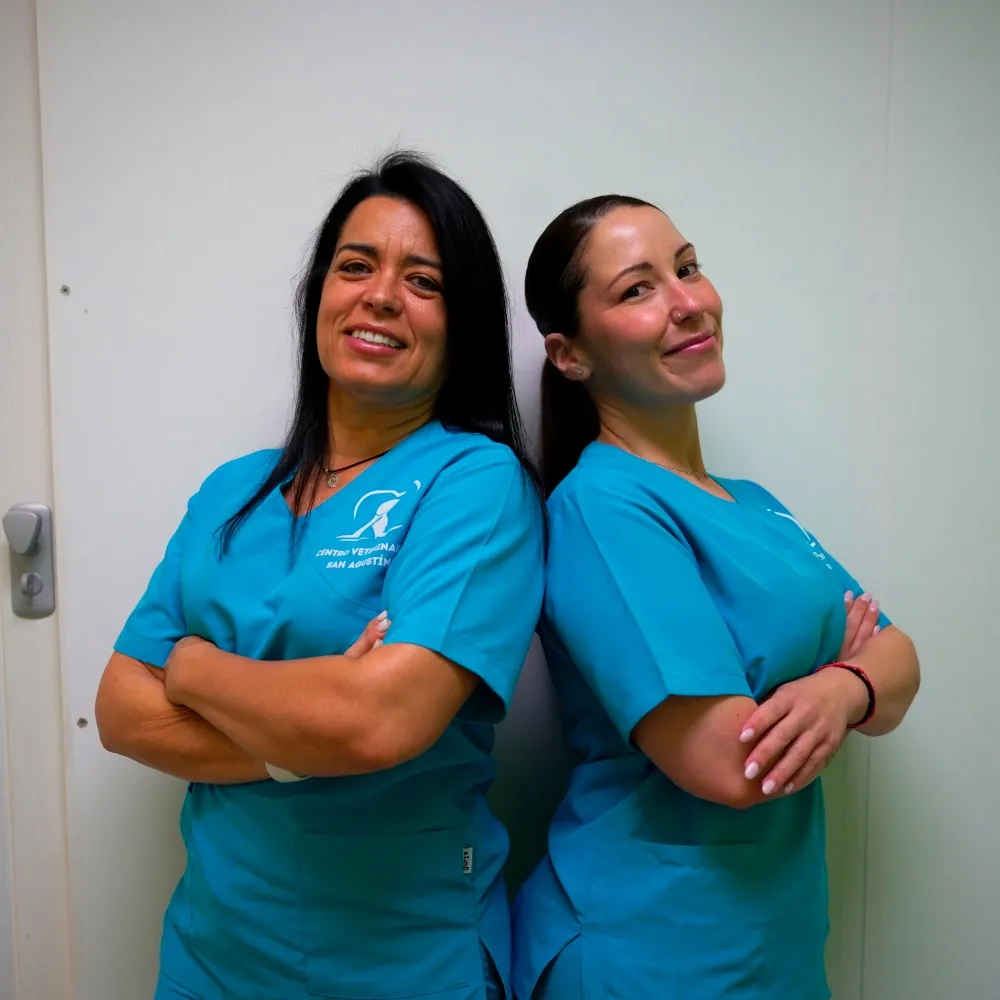
In Gran Canaria, there are fewer and fewer veterinary clinics that aren’t controlled by investment funds.
Veterinary medicine should be based on what your pet needs… not on sales targets.
We’ve known this for more than 25 years.
No endless forms, no waiting. You message us, we advise you, and you only come in if it’s really needed.
Tell us what’s wrong with your pet and, if you can, send us a photo or video. The more we know, the better we can guide you.
We reply in under 1 hour during opening hoursTogether we assess the situation and suggest what’s best for your pet.
Honest: we don’t recommend what isn’t neededIf needed, we set a day and time. We see your pet calmly and give them the time they deserve, without rushing or unnecessary waiting.
By appointment, so we can give them all the time they need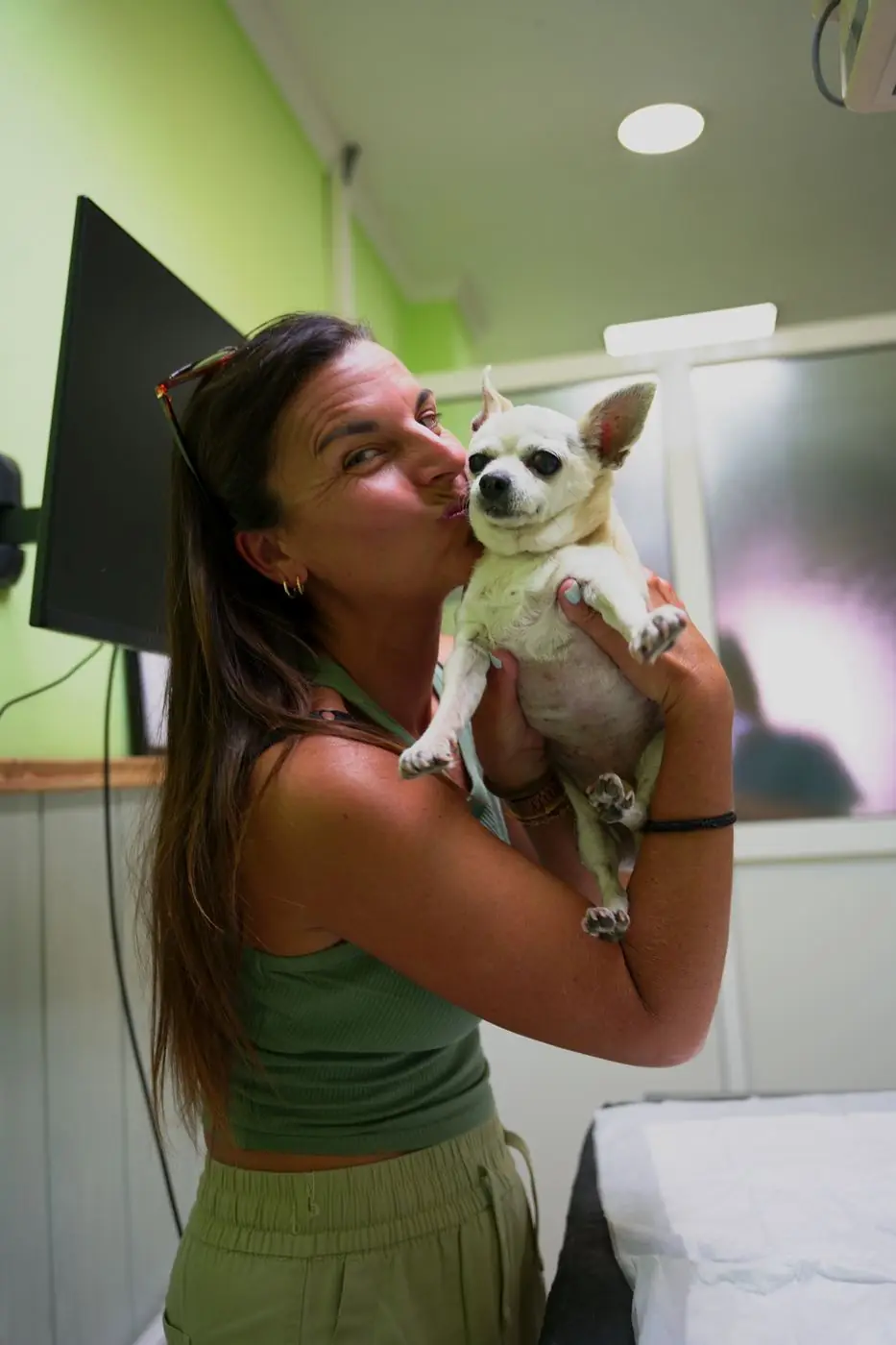
«Al ser un equipo de dos, la atención es increíblemente personalizada, cercana y familiar; conocen a mis animales a la perfección y ellos entran sin miedo.»
«Katy y Sarai han cuidado de mis niñas perrunas con mucho amor. Sobre todo de Ivy, que ya va de visita tranquila y sin temblar.»
«La atención es muy profesional, atenta y cariñosa con los michis. Tiene consideración especial con los gatitos recogidos. ¡Ayuda mucho!»
«Muchas gracias chicas por siempre atender a nuestra Beagle de forma excepcional, profesional y cariñosa.»
«Best veterinarian I have ever met! Highly recommended. Always professional but with a big heart.»
«Veterinaria con mucha formación, cariñosa con las mascotas y excelente relación calidad-precio. Un 10.»
Can’t find your question? Message us and we’ll reply in under 1 hour during opening hours.
Both during surgery and after the operation we use highly effective pain-relief protocols.
It depends on each animal, but they can usually lead a quiet life within a few days and are fully recovered within a few weeks.
There’s no single answer.
It depends on the type of pet and their development. We’ll assess it with you during the consultation.
There may be changes in metabolism, but with the right diet and exercise it’s easy to keep under control.
It depends on each animal.
There may be no problems, or long-term health or behavioural risks may appear.
In most cases a long stay isn’t necessary.
We’ll explain how the process will work in your specific case.
That’s the most important question.
That’s why, before deciding, we review your case and explain everything so you can choose calmly.